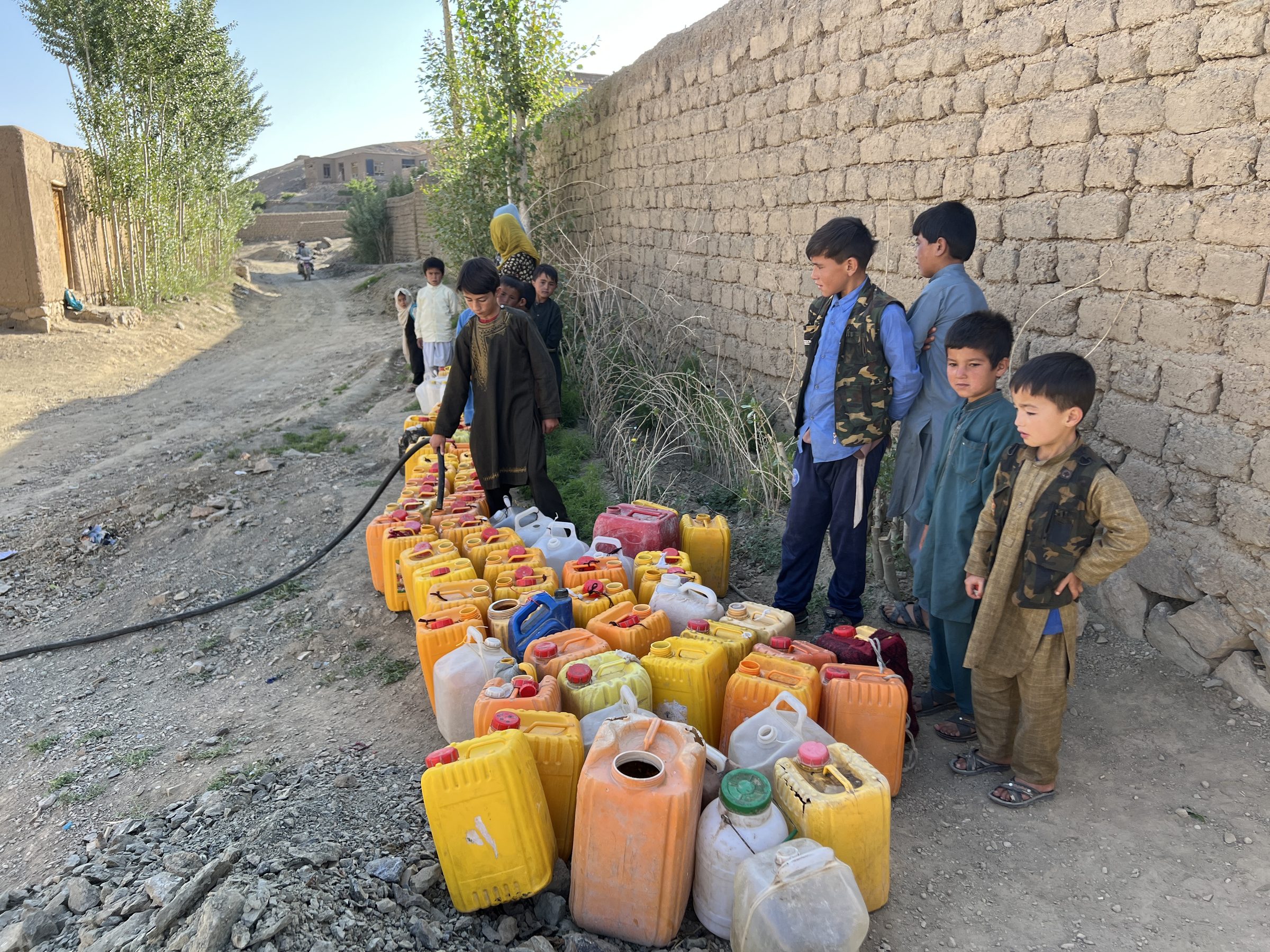

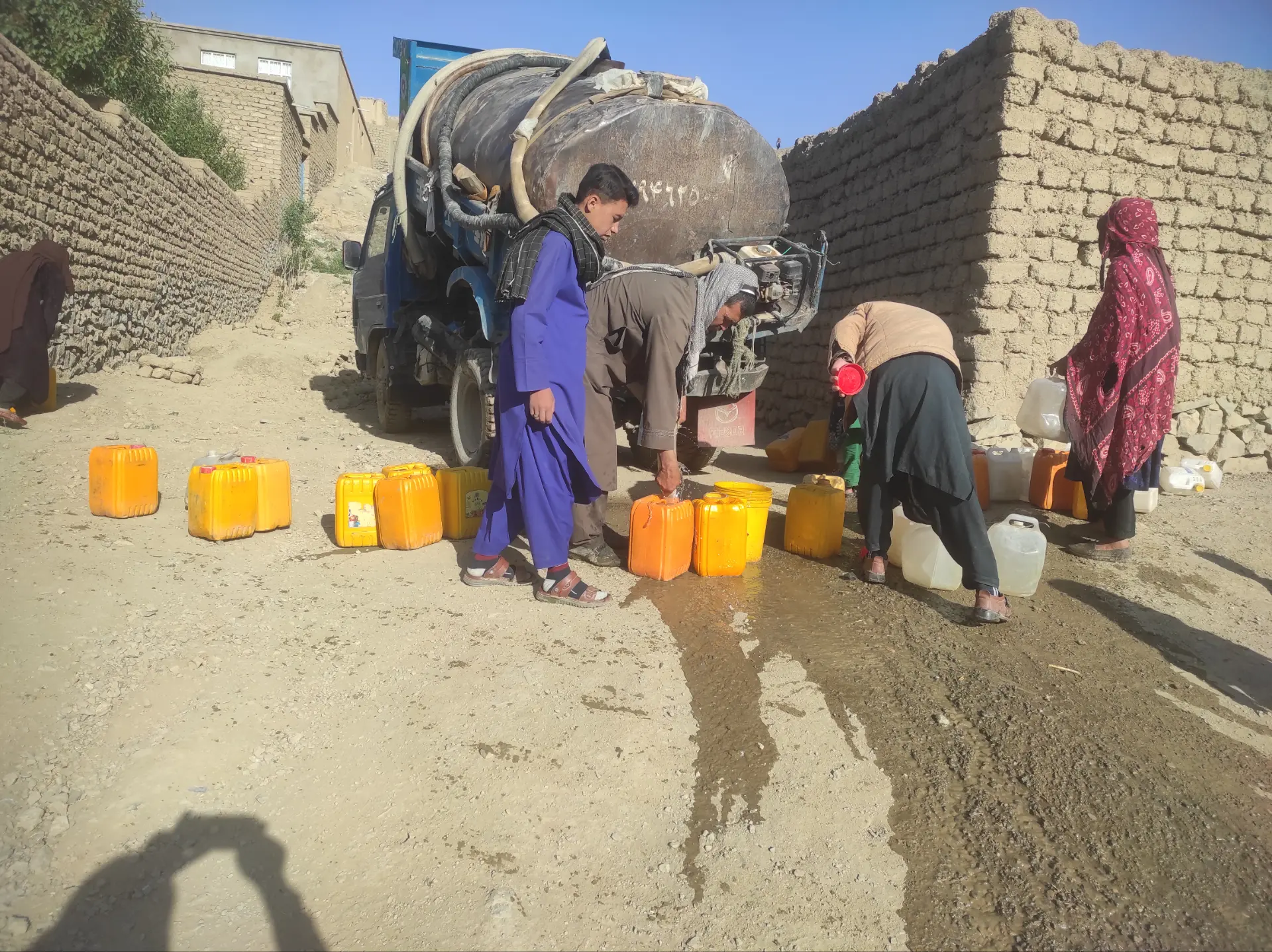
Ghor is one of Afghanistan’s most isolated provinces — and one the world keeps passing over. Our first pilot sets out to fix something that should never have been left this long: a reliable supply of clean water.
Families here are scattered across steep mountain terrain. Women and children spend hours each day walking to collect water that is often unsafe to drink, and round after round of humanitarian aid has passed the province by. Its geography and poverty keep it off the map for the kind of lasting infrastructure other places take for granted.
We don’t think the answer is another delivery truck. We think it’s engineering.
How the system works
The Smart Water Pipeline is a frugal, off-grid design with four parts. Solar-powered pumping lifts groundwater — no diesel, no grid. It fills elevated storage tanks placed on high ground, which hold a reserve and build pressure. From there, gravity carries water downhill through a distribution network to homes, so the system costs almost nothing to run. And IoT sensors watch for leaks and track flow, so performance is measurable and accountable from day one.
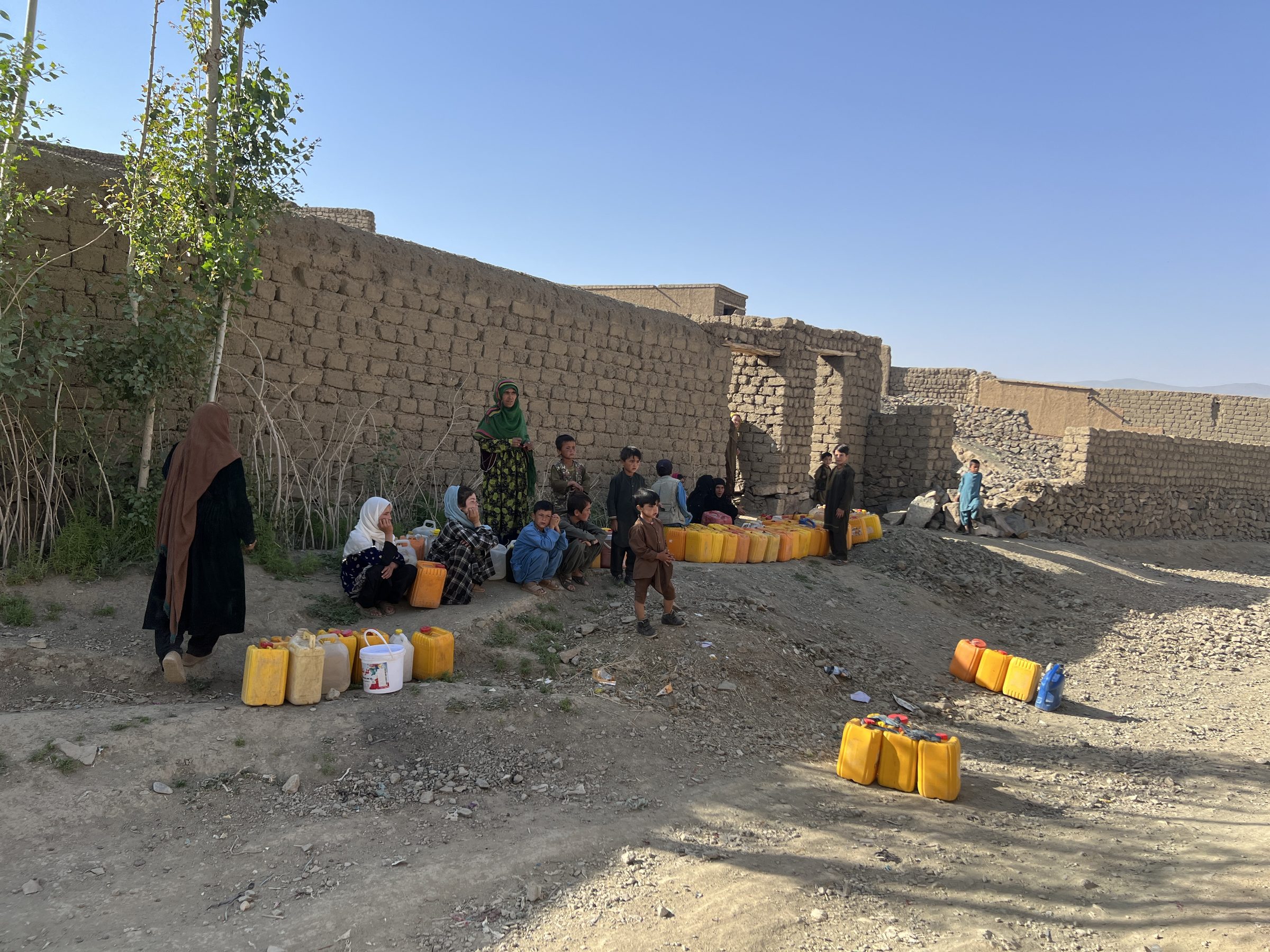
This isn’t water delivery. It’s the correction of a geographic inequality — permanent, locally-run infrastructure for a province the world keeps forgetting.
Built to stay
A system only matters if it keeps working after we leave. A paid local technician will run and maintain the pipeline, so the knowledge stays in the community and the infrastructure stays standing. As the pilot moves forward, we’ll publish what we build and what we measure — openly, here on this page.
If it works in one of the hardest places on earth, it can work in the next one.